

The suribachi is the Japanese mortar and pestle: a ceramic bowl with fine ridges on the inside, paired with a wooden pestle called a surikogi. It looks simple, but it grinds sesame seeds into a fragrant, creamy paste in about a minute, which is why it has a place in so many Japanese home kitchens.
This guide explains how to use a suribachi step by step, how it differs from a Western mortar and pestle, and how to make goma-ae, the classic sesame dressing that is the best first recipe to try.
What is a suribachi?
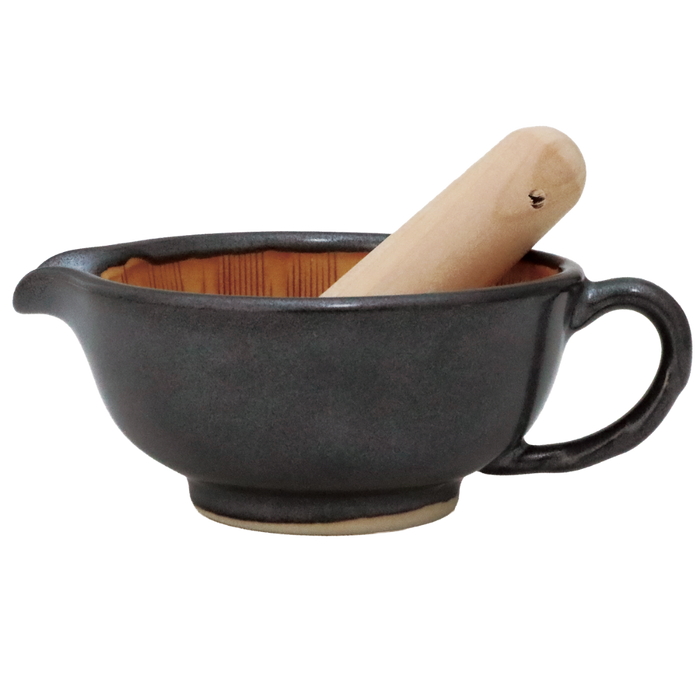
A suribachi (擂り鉢, literally “grinding bowl”) is a ceramic mortar whose unglazed interior is covered in a pattern of fine, sharp grooves called kushi-me (comb lines). The outside is glazed, but the inside is left rough on purpose: as you move the pestle, the ridges catch seeds and fibres and tear them open, releasing their oils and aroma.
The pestle, or surikogi, is made of wood. Wood is gentle on the ridges and grips the food rather than sliding over it. Instead of pounding, you grind in circles, which is why a suribachi is so good at turning sesame, nuts and miso into smooth pastes and dressings.
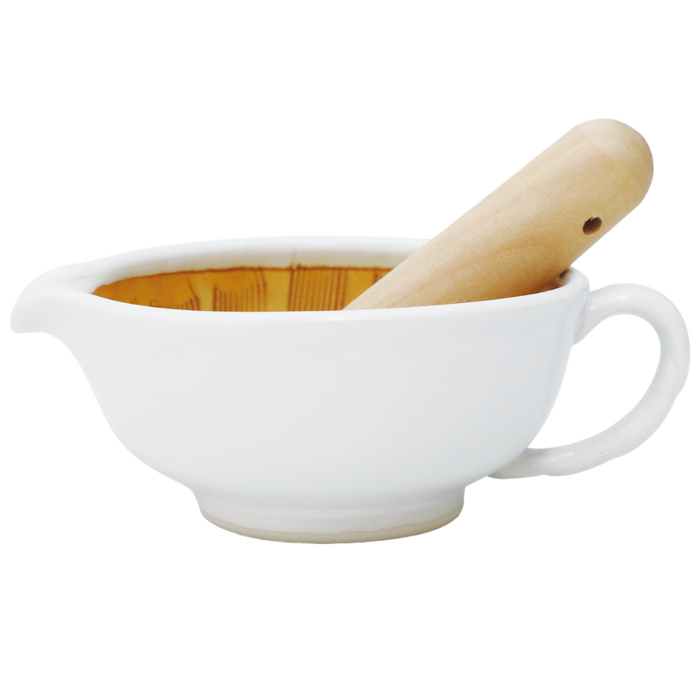
Our suribachi is Mino ware (美濃焼), made in Gifu Prefecture, Japan’s largest pottery region. It holds 180 ml, has a side handle for a steady grip and a pouring spout, and comes with a 98 mm wooden pestle: a practical size for everyday dressings for two to three people.
Suribachi vs. mortar and pestle
Both tools crush and grind, but they are built for different jobs.
| Suribachi (Japanese) | Western mortar and pestle | |
|---|---|---|
| Bowl surface | Ceramic with fine ridges (kushi-me) | Smooth or lightly textured stone, marble or granite |
| Pestle | Wooden surikogi | Stone or marble |
| Motion | Circular grinding | Pounding and crushing |
| Best for | Sesame, nuts, miso, tofu, soft herbs, dressings | Whole hard spices, curry pastes, large batches |
| Weight | Light, easy to bring to the table | Heavy, stays on the counter |
In short: if you mainly want to pound hard spices, a heavy stone mortar is the better tool. If you want fresh sesame paste, nut dressings or anything creamy, the ridges of a suribachi do the work for you in a fraction of the time.
How to use a suribachi, step by step
Sesame is the best way to learn the technique. Here is how to grind it:
- Toast the seeds. Put 2 tablespoons of white or black sesame seeds in a dry frying pan over medium heat. Shake the pan for 2–3 minutes until the seeds smell nutty and a few start to pop. Even pre-toasted sesame tastes better after a quick warm-up.
- Steady the bowl. Place the suribachi on a folded damp cloth so it cannot slide, and hold it by the side handle with one hand.
- Work in small batches. Add the warm seeds. In a 180 ml suribachi, 1 to 3 tablespoons at a time is ideal; too much and the seeds jump out instead of meeting the ridges.
- Grind in circles. Hold the top of the pestle loosely and press it against the side of the bowl, moving it in steady circles. Let the ridges do the work: light, even pressure is better than force.
- Stop at the texture you want. After about 30 seconds you have hanzuri (half-ground) sesame, with some whole seeds left, perfect for sprinkling. Keep going for another minute or two and the oils come out, giving a moist, fragrant paste for dressings.
- Add the other ingredients. Most Japanese recipes mix the seasonings right in the suribachi, so there is nothing to transfer.
- Serve or pour. Use the spout to pour dressings, and scrape the last bits out of the grooves with a spoon or a small brush.
Recipe: goma-ae (spinach with sesame dressing)
Goma-ae is the dish most Japanese cooks make first with a suribachi: blanched greens tossed in a sweet, nutty sesame dressing. It takes about 10 minutes and serves 2 as a side dish.
Ingredients
- 200 g (7 oz) spinach
- 2 tbsp white sesame seeds
- 1 tsp sugar
- 2 tsp soy sauce
- Optional: 1 tsp mirin for a softer, rounder taste
Method
- Bring a pot of lightly salted water to the boil. Blanch the spinach for 30–60 seconds, then move it straight into cold water to keep it bright green.
- Squeeze the spinach firmly to remove as much water as you can, then cut it into 4 cm (1.5 in) lengths.
- Toast the sesame seeds and grind them in the suribachi until most are broken and the paste smells rich, about 1 minute.
- Add the sugar, soy sauce and mirin to the suribachi and mix them into the sesame with the pestle.
- Add the spinach to the bowl and toss it in the dressing. Serve straight from the suribachi or in small bowls.
Variations: the same dressing works with green beans, broccoli, asparagus or blanched carrots. For a darker, more intense flavour, use black sesame.
More than sesame
Once you have the technique, the suribachi becomes a daily tool. A few favourites:
- Miso and sesame dressing: grind sesame, then work in a spoon of miso, a little sugar and rice vinegar for a dressing for cucumbers or cold noodles.
- Nuts: walnuts and peanuts grind into rich dressings (kurumi-ae with walnuts is a classic).
- Shira-ae: mash drained tofu with ground sesame, a little sugar and soy sauce for a creamy dressing for vegetables.
- Herbs and garlic: a small batch of pesto, or garlic and ginger ground into a fresh paste.
- Spices: dried herbs, sansho pepper and softer spices grind well with gentle pressure.
- Small guacamole: mash half an avocado with lime and salt for a quick single serving.
How to clean and care for a suribachi
- Clean the grooves right away. Sesame paste is easiest to remove before it dries. Rinse with warm water and clear the ridges with a small brush or an old toothbrush, brushing along the grooves.
- The bowl: our Mino ware suribachi is microwave and dishwasher safe, so after brushing out the grooves you can simply put it in the dishwasher.
- The wooden pestle: wash it by hand with mild soap, never soak it, and let it dry completely before putting it away. If the wood starts to look dry, rub in a little food-safe oil.
- Before first use: wash the bowl and pestle once with warm water and dry them.
- Normal wear: with daily use the wooden pestle slowly wears down at the tip and darkens. That is part of its character, not a defect.
Frequently asked questions
What is the difference between a suribachi and a surikogi?
The suribachi is the ridged ceramic bowl; the surikogi is the wooden pestle you grind with. Together they make the Japanese mortar and pestle set.
Why is the inside of a suribachi unglazed?
The rough, unglazed ridges create friction. They catch seeds and fibres and tear them open as you grind, which a smooth glazed surface could not do.
Can I grind spices in a suribachi?
Yes, dried herbs, sansho pepper and softer spices grind well. Use gentle, circular pressure rather than pounding. For very hard whole spices such as cinnamon sticks or nutmeg, a spice grinder or a heavy stone mortar is the better choice.
Do I have to toast sesame seeds before grinding?
It is not required, but it makes a big difference. Toasting dries the seeds so they break more easily and brings out their nutty aroma. Two to three minutes in a dry pan is enough.
What size suribachi do I need?
For everyday sesame, dressings and sauces for one to three people, a small suribachi like ours (180 ml) is ideal and easy to bring to the table. If you often grind tofu or cook for a large family, look for a bigger bowl.
Is a suribachi dishwasher safe?
It depends on the bowl. Our Mino ware suribachi is microwave and dishwasher safe. The wooden pestle should always be washed by hand and dried completely.
Start grinding
Freshly ground sesame tastes completely different from anything that comes out of a jar, and once you have made goma-ae in a suribachi it is hard to go back. Our black suribachi and white suribachi are genuine Mino ware from Gifu, each with its own wooden pestle. Discover more Japanese kitchen tools in our shop.
Join Our Newsletter


